
encounters
Soho: A Neighbourhood Between Memory and Makeover
February 23, 2026
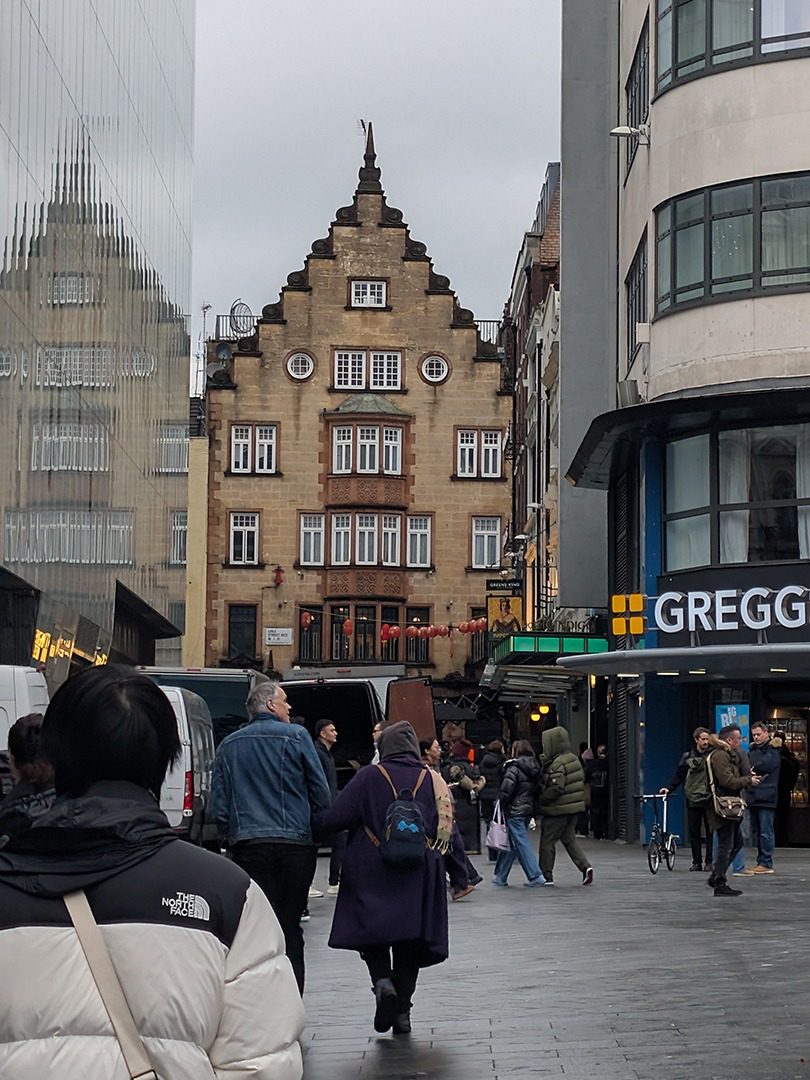
Soho stands as a curious juxtaposition of past and present. Wherever one walks, the eye is caught by magnificent old buildings, beautifully designed, their brown stone carefully carved, standing shoulder to shoulder with starkly modern structures of sharply cut glass, cement, and minimalist grey. The effect is puzzling: nothing seems to belong where it has been placed. Old pubs that once sheltered generations of working-class people, now sit beside polished, overpriced cocktail bar. Independent shops give way to boutiques and chain cafés, their interiors immaculate and strangely interchangeable. The neighbourhood appears to change with remarkable speed, its surface constantly polished and rearranged.
For a district so proudly advertised as inclusive, a celebrant of queer culture, freedom, and self-expression, Soho reveals a more complicated reality upon closer inspection. Its reputation rests on a long history of queer gathering, resistance, and nightlife, but much of this history now feels curated for visitors passing through. The queerness remains visible, certainly, but it is also increasingly commodified, transformed into part of the neighbourhood’s brand. We wonder, who truly benefits from this celebration, and who quietly disappears as rents climb and familiar spaces close their doors.
The same tension appears in its relationship to feminism. Soho has long cultivated an image of transgression and liberation, yet many of its spaces remain deeply shaped by male-dominated nightlife and commerce. While the district presents itself as progressive and open, the everyday experience suggests that inclusivity here is uneven, extended more generously to some than to others. Continuous gentrification reshapes the streets with impressive efficiency, replacing the rough edges that once defined Soho with something smoother, shinier, and considerably more expensive. And yet, for all this visible transformation, one cannot escape the feeling that beneath the new glass façades and polished interiors, the deeper structures of exclusion remain remarkably unchanged.
In Soho, it seems, the buildings evolve faster than the culture that inhabits them.